


Electric Vehicle FAQs
Electric Vehicle FAQs
We've answered your most frequently asked questions around Electric Vehicles, charging stations, EV tax credits in Pennsylvania, and more! Please contact Faulkner Hyundai Philadelphia with any additional questions about EVs.
Can electric cars be charged at home?
How do I find electric vehicle charging stations near me?
Are public EV charging stations free?
Are electric vehicle chargers universal?
Is there an Electric Vehicle tax credit in Pennsylvania?
Is an electric vehicle maintenance-free?
What Hyundai EV has the longest range?
Can Hyundai Electric Vehicles seat a family of 5?
Shop our latest Hyundai Lease Deals
At Faulkner Hyundai Philadelphia, our entire team works together to provide you with the ultimate Hyundai shopping experience. We are here to exceed your expectations, deliver the best service possible, and make car shopping fun again.

Used, Certified, Demo and Loaner Vehicle Prices do not include additional fees and costs of closing, including government fees and taxes, any finance charges, and dealer documentation fee of $490. All prices, specifications, and availability are subject to change without notice. The Price listed is valid for all consumers. Contact dealer for most current information. Call us at 215-904-4200 for more details.
More Info
Compare Certified Programs
 Hyundai Certified Used Vehicles
|
 Hyundai Select Used
|
|
|---|---|---|
| Vehicle eligibility | 6 model years old and newer with 80k miles or less |
|
| Vehicle inspection | 173-point inspection | 117-point inspection |
| Limited warranties |
|
|
| If anything happens |
|
|
| Complimentary trials |
|
|
Faulkner Hyundai Philadelphia
Address
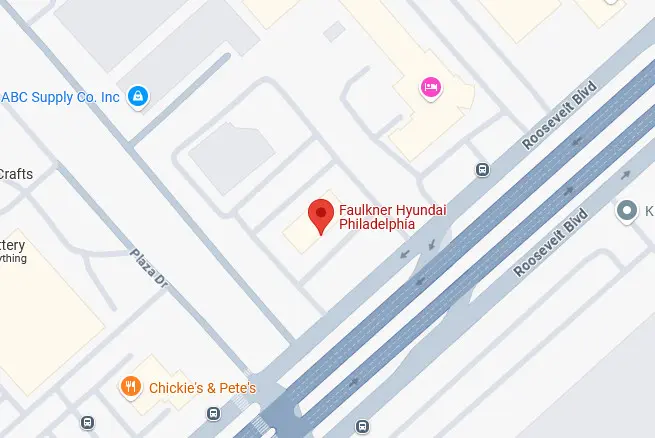
11500 Roosevelt Blvd
Philadelphia, PA 19116
Phone
- Sales 215-904-4217
- Service 215-904-4237
- Parts 215-904-4227
| Monday | 9:00AM - 7:00PM |
| Tuesday | 9:00AM - 7:00PM |
| Wednesday | 9:00AM - 7:00PM |
| Thursday | 9:00AM - 7:00PM |
| Friday | 9:00AM - 7:00PM |
| Saturday | 9:00AM - 5:00PM |
| Sunday | Closed |
| Monday | 7:30AM - 7:00PM |
| Tuesday | 7:30AM - 7:00PM |
| Wednesday | 7:30AM - 5:00PM |
| Thursday | 7:30AM - 5:00PM |
| Friday | 7:30AM - 5:00PM |
| Saturday | 7:30AM - 1:00PM |
| Sunday | Closed |
| Monday | 8:00AM - 7:00PM |
| Tuesday | 8:00AM - 7:00PM |
| Wednesday | 8:00AM - 5:00PM |
| Thursday | 8:00AM - 5:00PM |
| Friday | 8:00AM - 5:00PM |
| Saturday | 8:00AM - 1:00PM |
| Sunday | Closed |